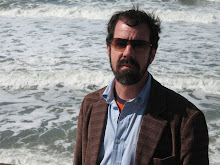
It just so happens that I've worked in a landmark hotel here in San Francisco as a reception desk clerk for the past several years. Originally, I took this job as a stopgap, figuring I'd find work in my trade as a Lithographer at a later date. Two things happened. First of all, I found that the union benefits and seniority protections made my job quite enviable. Lastly, I discovered that my trade is all but a tattered remnant in the city where I wish to live, thanks to outsourcing and other things.
On top of everything else, I have found that I really like what I do for a living. I have many opportunities daily to talk to all sorts of people from all sorts of socioeconomic backgrounds, and varied cultures. The more I get to meet all these people, the more I've begun to realize that we all share the same concerns, hold the same values, and essentially we share much more in common than what might separate us. It also gives me an opportunity to plant seeds of change. I started this blog with the hopes that some of my ideas (those seeds of change) would get picked up and discussed, and people would begin to see some of the things I have noticed, and begin to reach their own conclusions. Right now, this blog has yet to gain any real readership or recognition, but it is a place where I am free to write down my insights and formulate ideas. Perhaps one day it will take off, but even if it simply inspires a few individuals to do something, then it has served a purpose greater than what I could ever do by myself.
Words – or better said, the ideas which words represent are powerful forces that can manifest themselves as physical realities. This is why we are wise to pick our words carefully. We are wise to refrain from immediately reacting to a given situation. Silence can be one's best defense. More often than not, we are generally unconscious to our words, and we tend to parrot everything we hear. At some point we can believe our own lies, and then those lies, or distortions, or exaggerations become manifest in the physical world in all sorts of ways.
My job in particular, is one of those jobs where diplomacy is paramount. But that does not mean I'm not free to express myself. I just have to choose my words with extreme care. Once a guest inquired as to whether or not I supported trade unions. It was apparent to me that our guest was not a fan of organized labor. My response to her was "Yes, I support organized labor. I am actually one of the representatives of my union here at this hotel, and it is my duty to ensure that our negotiated contract is followed and to make sure that our members are treated equitably. I don't believe that unions are free from corruption, or that they never make grave mistakes, or even that there have not been times unions have worked against their best economic interests. I keep an open mind, and many detractors of organized labor have made some valid arguments against them. Ideally, labor would represent all working people – not just those who are able to organize. But in the end, I believe there needs to be a balance of power for a democratic process to function, and in this country, the only true representatives of labor have been trade unions, and when it comes right down to the nitty-gritty, I know that my union has my best interests at heart." Our guest was dumbstruck, and realized that in my summary there was no way she could argue with me, because I had made a concession to her, and confessed that I did not have the perfect answer, but I made it clear that I would support the organization that had my best interests first and foremost. And why would I or anyone else for that matter, vote against our interests? I'm sure that this lady walked away with a different perspective, and perhaps more open to other ideas. If anything, I was at least successful in explaining why there are people who support unions. Had I been afraid to express myself, or worse yet, had I come across as defensive and argumentative, no transformation would take place – to the contrary, this individual would likely become more entrenched in her world view.
A few months ago, we raised our parking rates from $45 to $50 overnight. It is incredible how many of our guest's are up in arms over this. My strategy initially was to avert the blame by stating that the hotel does not manage the garage, and we have no control over their parking rates, which is generally correct. After seeing that averting the blame did little to quell our guest's ire, I tried another tactic, which was one of comparison. Stating that our parking rates were within the going rate in the area, seemed to work a little better. But I've found that my best tactic is simply to side with the guest and say something to the effect of, "isn't it crazy?". The problem with this tactic is that it is disingenuous. Let me explain why this is so.
There are things that have inherent value. A thing becomes more valuable as its scarcity rises. Space is one of those things. If you think about it, you'll realize that space is indeed limited on this planet. In fact, the oceans cover two thirds of the surface – so you can immediately count that out until we start building floating cities! But the truth of the matter is that space, especially in urban areas, is at a premium. And when you begin to realize that the auto-centric urban environments have dedicated a surprising amount of space to the personal motorcar, you'll also begin to realize how amazingly subsidized that space is when compared to everything else. I have made the same point repeatedly regarding fuel costs. The real price of gas is conservatively estimated at $20 per gallon. If the consumer were to see this reality at the pump, he would sell his car, buy a bicycle, move closer to work, or take public transit (or do all the aforementioned).
So let's get back to the idea of a privately owned car, and the ability to park it at will on open public space, or within a garage. One of my mental exercises involves taking a stroll through one's neighborhood and imagining personal, and privately owned objects, preferably of value, in place of the cars that are parked on the street. If you spot a new Mercedes Benz, then you can imagine a fine Persian carpet with a very expensive leather sofa, and perhaps an antique end table with a lovely art nouveau lamp on it, since that would essentially equate the value of the car in that space. Now let's say we come across a compact economy car, like a Toyota. Now we can imagine a large plasma screen television set and high-fidelity stereo system and a nice modern recliner in its place. Lastly, imagine a smog-belching junk heap of an automobile that might be worth five hundred dollars on a good day. You've just imagined my entire apartment's furnishings! Isn't this a fun exercise? This is exactly what personal transport is with a few important differences. First of all, it is arguably more of an eyesore, and it is noisier, it emits toxic fumes (and people get upset with cigarette smokers!), and it is only available to its owner. Presumably, if one were to park a sofa on the street, people tired from walking could take a break and sit upon it.
Most importantly, the car is designed to be mobile, although ironically, it spends over ninety percent of its time resting. That means that wherever I drive my car to, I need a space to park it once I get there. If you figure conservatively that the average parking space takes up 275 square feet, and every car owner needs an average of six parking spaces throughout the city at their disposal, then each car needs roughly 1,650 square feet of space for its intended operation, not including roadways. Now if you figure your average apartment is 700 square feet, and the average rent in this city is $1500 per month, you'll see that the residential rate is roughly $2 per square foot. If you figure that each car requires 1650 square feet of space throughout the city, then would it not be equitable to charge $3000 per month for its parking requirements? Can you begin to see how car owners are subsidized? Even if you were to charge for a single residential space, the equitable amount would be $550 per month, and our parking rates are not anywhere near that. You can buy a residential permit in my crowded neighborhood and park your heap of junk for $60 annually, or quite frankly next to nothing. Why is such valuable space considered so exclusive to the private use of car owners?
By now, you can probably see where I'm going here. Could it be then that parking is also subsidized by our hotel guests? Our hotel's average daily rate for a room is about $250 per night. Our average room is about 450 square feet. That equates to 55 cents per square foot. So you can see right off that $50 per night for a parking space is one third the going rate. Albeit, there is minimal maintenance, no maid service, and little in the way of utilities involved in keeping a parking space. However, there is overhead involved – there are parking attendants and there is a valet parking service. I dare say, a more equitable rate would be $80 per night, and I figure that conservatively. So to a certain degree, our guests who choose not to use our parking facility are subsidizing our guests who do utilize the parking facility.
As long as car ownership is considered a right in this country, and as long as we continue to subsidize its use, attitudes will likely never change. Yet when you begin to consider the actual cost of the automobile, the alternatives begin to look quite appealing indeed. The less we rely on our cars within urban environments, the more we can begin to invest in attractive alternatives. There are infinite possibilities out there. There is no particular reason why we cannot fathom cities with carfree zones, or carfree cities, for that matter. I for one, hope that someday I will be able to live in my city as a free citizen, stripped from the burdens of autocentric culture, where children are free to play in the streets, where citizens can gather in public spaces without fear of being hit by a car, and where there is less noise and pollution.
Now its your turn to imagine the possibilities.
Showing posts with label parking. Show all posts
Showing posts with label parking. Show all posts
Wednesday, 25 June 2008


Saturday, 12 May 2007
Gas Is Heavily Subsidized and So Is Parking
There has recently been a chain e-mail circulating and making its rounds that encourages consumers to boycott purchasing gas on May 15, in order to send a message to the Gas & Oil Corporations that we are fed up with such inflated prices at the pumps. Whereas I am a staunch supporter of consumer/citizen action, I also believe the real point is missed entirely here. First in my mind, a single day will hardly make any lasting effect on the price of gas, because the underlying demand still exists. What will make a difference is for us to reevaluate our driving habits and make significant changes. The best thing we can do for our future and the future of our kids is to relinquish our dependence on the automobile entirely. The next best thing we can do is reconsider how many cars we need. In other words, can we make due with a single car? We can conserve the number of miles we drive – consolidate trips, carpool, limit unnecessary jaunts – as this will conserve gas and bring demand down. Finally, we can trade in our guzzlers for hybrids, biodeisel or low emission vehicles. But keep in mind that the manufacture of automobiles is in and of itself very hard on the environment. It actually does much less damage to the environment to keep an older car in good mechanical condition and simply drive conservatively. Limit your milage and drive slowly and smoothly, not abruptly or spasmodically. Many people do not realize this.
The automobile is driving us poor. Forget the price of gas; there are several other huge outlying costs to automobile ownership, such as insurance, maintenance, licensing fees and other taxes, and parking. No wonder people are upset that gas is nearly four dollars per gallon.
In my mind, however, the price of gas is not the main issue. There are actually quite a few hidden costs to the gas we put in our tanks – namely the continued occupation of Iraq. Now the administration appears to be considering launching an attack on Iran. Expect much higher prices should this terrible blunder be made. The actual price per gallon of gasoline when these hidden costs are factored in is really 7 - 8 dollars per gallon (some estimates are as high as 10 dollars per gallon). That means that citizens who do not even drive are subsidizing the price of gas for those who do drive. If consumers could see those real numbers at the pump, I bet they'd start changing their driving habits quickly. But as it currently stands, the price of gas is ridiculously low and heavily subsidized.
It also stands to reason that the roads and parking considerations are also heavily subsidized, regardless of the occasional toll (which in itself is counterproductive to relieving congestion, conserving energy or reducing commute times). Suburban sprawl has nearly dictated that we all drive to our destinations, but even in these less than idyllic conditions, ask yourself if a bicycle will allow you to make certain trips. Can you walk? Right now, cars own the roads, but we can reclaim our streets. Have you ever wondered just how much space cars take up? Not to mention the visual clutter they make.
I have a little task for you, should you indulge me. Take a walk through your neighborhood, and when you do so, focus on automobiles and everything built to accommodate them. Take mental note as though you come from a place or time where automobiles do not exist. Simply observe the space they require, observe how inanimate the majority are, and how they simply occupy space and do very little in regard to actually moving people. Now imagine each car as a large sofa. What would you think if your neighbor parked his sofa in front of your house? Can you begin to see how the automobile is an anti-social device? Now imagine a vibrant street with people on it with no cars to be seen. People are much more interesting than metal boxes, are they not?
I commend to you a well written and informative article on the subject: "The Automobile Shapes the City", by Martin V. Melosi. I have posted a couple excerpts pertinent to our discussion:
Even cars at rest—in parking mode if you will—created problems for cities that few other forms of transportation faced. It is ironic that a technology designed to provide individuals with greater flexibility in meeting their transportation needs remains unused much of its life. “An adequate highway system—one affording completely free movement of vehicles—would still not solve our transportation problem,” noted one expert in 1950. “This is because the objective of every motor vehicle is a terminal. The average motor vehicle, for instance, is in motion about 500 hours a year; it is parked the remaining 8,260 hours.” More than forty years later, other experts expressed a similar sentiment: “If one were to set out the most inefficient means of transport, the auto might be the outcome. Consider, for example, the facts that the average auto is parked and unused for about 90 percent of its lifetime and that even when it is used, it is nearly empty.”

Detroit in 1962 – an abominable waste of prime real estate & blight on the city; car parks prevail.
Excerpt from same article: A parking study conducted in California stated that about 59 percent of the ground area in Los Angeles’ central business district (CBD) in 1960 was devoted to streets and parking, with about 35 percent for roads, streets, alleys, and sidewalks, and 24 percent for parking lots and garages not included in buildings with other purposes. During roughly the same period, acreage devoted to streets and parking in other urban cores was similar in scale or slightly less. In Detroit (1953), streets and parking made up 49.5 percent of the central city; in Chicago (1956), 40.7 percent; in Minneapolis (1958), 48.3 percent; Nashville (1959), 39 percent; and in Dallas (1961), 41.4 percent.
What one does not see here is the square footage of garages within buildings and the space reserved for street parking, so the amount of land required for parking cars and housing them is really quite astounding. We have destroyed our cities in the United States. There are few examples of vibrant cultural centers that remain, and in those few cases (such as San Francisco and New York City) the public fought and prevailed against carving their cities up with expressways. San Francisco made the wise decision to finally tear down the few expressways that were built, starting with the Embarcadero Freeway, and later the Central Freeway. Both neighborhoods are now revitalized, and visually pleasing.

Central Freeway Before

After

Had the planners had their way…truly would have been the death of my beloved city. (1948 plan)
Now it's time for the good news. There are options, and we live in a democracy where we still have a voice. Albeit, at this stage it might actually require wresting that voice back with a little civil disobedience. Nonetheless, the inspired documents of our founding fathers remain regardless of our leader's open defiance of them. Some people have rightly inquired why I have chosen the automobile as my personal adversary. Obviously we have bigger problems, there's the "war on terror", failing schools, lost jobs, destruction of the environment, loss of freedom, escalating health care costs and collapsing infrastructure. Why would I pick on the defenseless passenger car?
Here's how I see it, and my gratitude for following my leaps of logic. Currently we are "at war". It is not a war in the traditional sense. We cannot even see our enemy. I could go on for a thousand pages on this subject alone, but I will spare everyone. I think we can all pretty much agree than the main motivation behind our invasion and occupation of Iraq is the mere fact that it happens to sit on some of the world's largest oil reserves. We use a lot of oil in this country – some may say we are quite dependent upon it. A good deal of that oil is combusted in engines of automobiles. We have also created infrastructure and cities that are largely dependent upon automobiles as a means of getting around. If we begin to rethink this, redesign our existing cities and fund public transit, and perhaps have the vision to begin to build new car-free cities, we will decrease our dependence on foreign oil. We will no longer have to waste billions of dollars fighting global wars, and instead we can fund infrastructure, schools and healthcare, and in doing so we can create high paying jobs and rebuild our economy. We are on the verge of what can either become a global catastrophe, or a bright new future. The decision is ours. Now is the time.
May God help us.
The automobile is driving us poor. Forget the price of gas; there are several other huge outlying costs to automobile ownership, such as insurance, maintenance, licensing fees and other taxes, and parking. No wonder people are upset that gas is nearly four dollars per gallon.
In my mind, however, the price of gas is not the main issue. There are actually quite a few hidden costs to the gas we put in our tanks – namely the continued occupation of Iraq. Now the administration appears to be considering launching an attack on Iran. Expect much higher prices should this terrible blunder be made. The actual price per gallon of gasoline when these hidden costs are factored in is really 7 - 8 dollars per gallon (some estimates are as high as 10 dollars per gallon). That means that citizens who do not even drive are subsidizing the price of gas for those who do drive. If consumers could see those real numbers at the pump, I bet they'd start changing their driving habits quickly. But as it currently stands, the price of gas is ridiculously low and heavily subsidized.
It also stands to reason that the roads and parking considerations are also heavily subsidized, regardless of the occasional toll (which in itself is counterproductive to relieving congestion, conserving energy or reducing commute times). Suburban sprawl has nearly dictated that we all drive to our destinations, but even in these less than idyllic conditions, ask yourself if a bicycle will allow you to make certain trips. Can you walk? Right now, cars own the roads, but we can reclaim our streets. Have you ever wondered just how much space cars take up? Not to mention the visual clutter they make.
I have a little task for you, should you indulge me. Take a walk through your neighborhood, and when you do so, focus on automobiles and everything built to accommodate them. Take mental note as though you come from a place or time where automobiles do not exist. Simply observe the space they require, observe how inanimate the majority are, and how they simply occupy space and do very little in regard to actually moving people. Now imagine each car as a large sofa. What would you think if your neighbor parked his sofa in front of your house? Can you begin to see how the automobile is an anti-social device? Now imagine a vibrant street with people on it with no cars to be seen. People are much more interesting than metal boxes, are they not?
I commend to you a well written and informative article on the subject: "The Automobile Shapes the City", by Martin V. Melosi. I have posted a couple excerpts pertinent to our discussion:
Even cars at rest—in parking mode if you will—created problems for cities that few other forms of transportation faced. It is ironic that a technology designed to provide individuals with greater flexibility in meeting their transportation needs remains unused much of its life. “An adequate highway system—one affording completely free movement of vehicles—would still not solve our transportation problem,” noted one expert in 1950. “This is because the objective of every motor vehicle is a terminal. The average motor vehicle, for instance, is in motion about 500 hours a year; it is parked the remaining 8,260 hours.” More than forty years later, other experts expressed a similar sentiment: “If one were to set out the most inefficient means of transport, the auto might be the outcome. Consider, for example, the facts that the average auto is parked and unused for about 90 percent of its lifetime and that even when it is used, it is nearly empty.”
Detroit in 1962 – an abominable waste of prime real estate & blight on the city; car parks prevail.
Excerpt from same article: A parking study conducted in California stated that about 59 percent of the ground area in Los Angeles’ central business district (CBD) in 1960 was devoted to streets and parking, with about 35 percent for roads, streets, alleys, and sidewalks, and 24 percent for parking lots and garages not included in buildings with other purposes. During roughly the same period, acreage devoted to streets and parking in other urban cores was similar in scale or slightly less. In Detroit (1953), streets and parking made up 49.5 percent of the central city; in Chicago (1956), 40.7 percent; in Minneapolis (1958), 48.3 percent; Nashville (1959), 39 percent; and in Dallas (1961), 41.4 percent.
What one does not see here is the square footage of garages within buildings and the space reserved for street parking, so the amount of land required for parking cars and housing them is really quite astounding. We have destroyed our cities in the United States. There are few examples of vibrant cultural centers that remain, and in those few cases (such as San Francisco and New York City) the public fought and prevailed against carving their cities up with expressways. San Francisco made the wise decision to finally tear down the few expressways that were built, starting with the Embarcadero Freeway, and later the Central Freeway. Both neighborhoods are now revitalized, and visually pleasing.
Central Freeway Before
After
Had the planners had their way…truly would have been the death of my beloved city. (1948 plan)
Now it's time for the good news. There are options, and we live in a democracy where we still have a voice. Albeit, at this stage it might actually require wresting that voice back with a little civil disobedience. Nonetheless, the inspired documents of our founding fathers remain regardless of our leader's open defiance of them. Some people have rightly inquired why I have chosen the automobile as my personal adversary. Obviously we have bigger problems, there's the "war on terror", failing schools, lost jobs, destruction of the environment, loss of freedom, escalating health care costs and collapsing infrastructure. Why would I pick on the defenseless passenger car?
Here's how I see it, and my gratitude for following my leaps of logic. Currently we are "at war". It is not a war in the traditional sense. We cannot even see our enemy. I could go on for a thousand pages on this subject alone, but I will spare everyone. I think we can all pretty much agree than the main motivation behind our invasion and occupation of Iraq is the mere fact that it happens to sit on some of the world's largest oil reserves. We use a lot of oil in this country – some may say we are quite dependent upon it. A good deal of that oil is combusted in engines of automobiles. We have also created infrastructure and cities that are largely dependent upon automobiles as a means of getting around. If we begin to rethink this, redesign our existing cities and fund public transit, and perhaps have the vision to begin to build new car-free cities, we will decrease our dependence on foreign oil. We will no longer have to waste billions of dollars fighting global wars, and instead we can fund infrastructure, schools and healthcare, and in doing so we can create high paying jobs and rebuild our economy. We are on the verge of what can either become a global catastrophe, or a bright new future. The decision is ours. Now is the time.
May God help us.
Subscribe to:
Posts (Atom)